
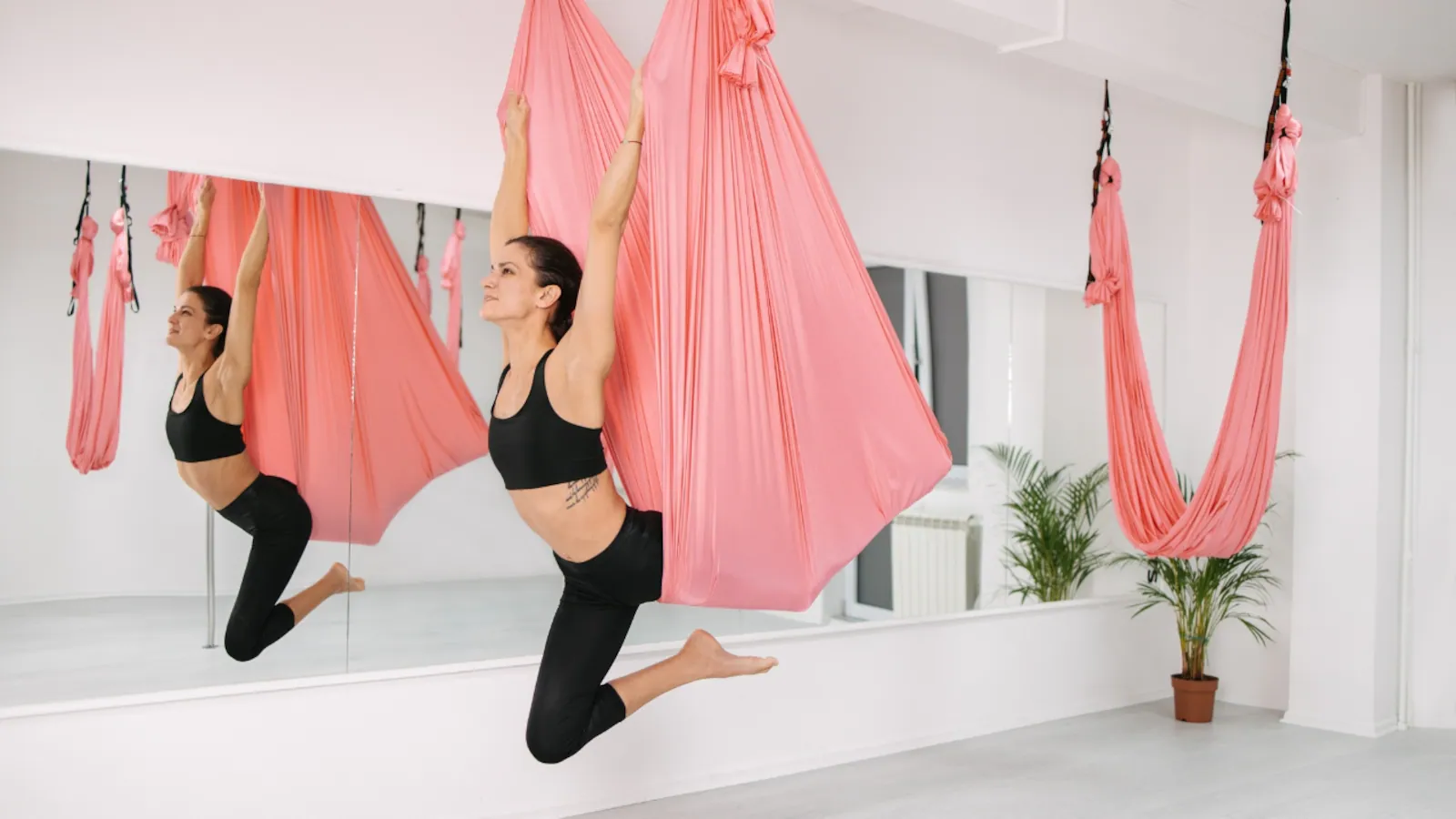

Clothing for aerial practice has to interact with moving fabric. A garment that works well for mat exercise may slide, bunch or expose skin when the hammock supports the hips, thighs or torso. Before attending aerial yoga, participants should choose fitted, secure clothing that protects both the body and the equipment.
The objective is not to purchase a specialised fashion collection. It is to reduce friction, prevent snagging and allow the instructor to see how the body and hammock are positioned.
Coverage Protects High-Contact Areas
Aerial fabric can create pressure and friction as body weight shifts. Covering the backs of the knees, waist and underarms may reduce direct skin contact in common support positions.
Full-length leggings are often more practical than shorts. Shorts may expose the thighs and allow the hammock to pull against the skin. If the fabric wraps behind the knees, uncovered skin can become uncomfortable.
A top that covers the torso securely may also reduce irritation around the waist and ribs. Loose tops can move towards the face during inversion, so fitted construction or a reliable tuck is preferable.
Coverage should remain comfortable in Singapore’s climate. Lightweight, breathable fabric can provide protection without requiring thick layers.
Fabric Surface Changes Grip and Slide
Very smooth clothing may slide through the hammock more easily than expected. This can make it difficult to maintain the intended fabric position during a supported pose.
Highly textured fabric can create the opposite problem. It may grip the hammock strongly, causing the garment to pull against the skin during transitions.
A suitable fabric allows controlled movement without feeling slippery. Stretch should work in multiple directions so the garment can accommodate hip flexion, rotation and overhead reaching.
Before class, test the clothing by squatting, folding forward and lifting the arms. If the top rises or the leggings shift during these basic movements, suspension is likely to make the issue more noticeable.
Avoid Hardware That Can Damage the Hammock
Zips, buckles, metal fasteners and decorative studs can catch on aerial fabric. Even a small sharp edge may create a pull that weakens the material.
Clothing with exposed drawstring tips or rough branding elements can also cause problems. Sports bras should be checked for metal adjusters that may contact the hammock.
Participants should inspect items such as:
- Trouser zips.
- Metal eyelets.
- Decorative mesh with rough edges.
- Exposed hooks.
- Hard plastic toggles.
- Sharp fingernails.
- Watches and jewellery.
- Hair accessories with metal components.
Studios commonly ask participants to remove jewellery before class. This protects the hammock while reducing the chance that an item catches during movement.
Seam Placement Affects Pressure
A seam that feels unremarkable while standing may become uncomfortable when the hammock presses it into the body.
Thick seams across the waist, outer thigh or back of the knee can create concentrated pressure. Raised logos and pockets may cause similar irritation.
Flat seams are often more comfortable, but location remains important. Turn the garment inside out and feel the areas likely to contact the fabric. If a seam is bulky under light finger pressure, it may become distracting when supporting body weight.
Seamless garments can reduce pressure points, although they still need sufficient structure. A poorly fitted seamless legging may stretch or slide more than a well-constructed seamed option.
Compression Should Support Without Restricting
Moderate compression can keep clothing in place and reduce loose fabric. Excessive compression may restrict breathing or make hip movement uncomfortable.
Aerial yoga can involve deep flexion and rotation. A waistband that feels secure when upright may dig into the abdomen once the body folds around the hammock.
Test the garment by bringing the knees towards the chest and taking a slow breath into the ribs. The waistband should remain stable without creating sharp pressure.
Sports bras should provide appropriate support while allowing the shoulders and rib cage to move. Maximum compression is not always necessary for a controlled aerial class.
Moisture Management Matters in Singapore
Participants may perspire before reaching the studio due to outdoor heat and humidity. Damp clothing can change how the body moves against the hammock.
Some fabrics become heavier or stretch when wet. Others retain odour or remain damp for a long time after class. Lightweight technical materials usually dry faster, but they should still provide opacity and reliable recovery.
Useful fabric qualities include:
- Breathability.
- Four-way stretch.
- Stable shape when damp.
- Smooth internal finishing.
- Opacity under tension.
- Fast drying after washing.
- Resistance to repeated friction.
Cotton can feel comfortable initially but may hold moisture longer. It can still work if the class intensity is low and the participant prefers it, although a cotton garment should not become loose when damp.
Choose Colour and Opacity Practically
Opacity should be checked in a stretched position. Bright studio lighting can reveal fabric that appeared fully opaque at home.
Perform a squat and forward fold in front of a mirror or ask someone trusted to check the material. This is particularly important for thin, light-coloured leggings.
Colour itself does not affect movement, but visible contrast can help an instructor observe where the hammock contacts the body. Extremely busy prints may make fabric placement harder to see, although fit and construction remain more important.
Hair, Hands and Personal Products
Long hair should be secured without sharp clips. A soft hair tie or fabric-covered band is usually a safer choice than a metal accessory.
Hand creams and body oils can transfer to the hammock and reduce grip. Apply them after class rather than immediately before it. Strong fragrances may also be uncomfortable in a shared studio.
Fingernails and toenails should be smooth to reduce the chance of catching the fabric. Small practical details can protect equipment more effectively than purchasing expensive clothing.
Confirm the Studio’s Requirements
At Yoga Edition, participants should review class instructions and arrive in clothing that provides secure coverage without exposed hardware. Studio policies may specify leggings, sleeves, socks or jewellery removal, so checking them before the session avoids last-minute difficulties.
A useful aerial outfit can be assembled from existing activewear if each item passes a simple movement and hardware check. The clothing should stay in place when inverted, cover high-contact areas and allow unrestricted breathing.
Good aerial clothing becomes almost invisible during practice. It neither catches the hammock nor demands repeated adjustment. By prioritising fabric behaviour, coverage and seam placement, participants can protect their skin, preserve studio equipment and keep their attention on controlled movement.